Musket, Fife & Drum
Why Fife and Drum
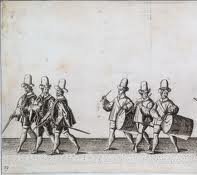
The drum march was one of the main features of military discipline, and every country had its own particular rhythms, or "tunes", to give instructions in camp, on the movement of troops, or on the battlefield. Gordon of Rothiemay records in 1637-1638 how Scottish drummers taught their soldiers to distinguish between the marches of England, Ireland and Scotland. During the Thirty Years' War the Germans once used the Scots March to deceive the enemy.
The first appearance of the fife and drums we know today was in Switzerland. The fife did not at first command universal respect — its shrillness had offended Shakespeare, who spoke of the "vile squeaking of the wry-necked fife" — but the need for long marches saw fife and drum music develop through the 15th century, noted by the rest of Europe at the Battle of Marignano (near Milan) in 1515.
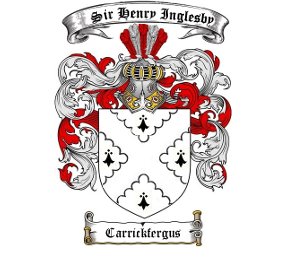
The Germanic principalities adopted this music in the 1500s and 1600s. The French employed Swiss mercenaries in the 1600s and 1700s, who brought their fife and drum music with them and introduced it to the French army. Fifes and drums were being used in Ireland as early as 1590 — a hundred years before the installation of Sir Henry Inglesby as Captain of the Guard at Carrickfergus Castle.
The Drum Calls
- The Voluntary — in effect, "get ready" for the next order. The pikes would come to the Advance, musketeers would give rest to their muskets, and the next order would follow.
- The Call — "The Assembly": the troops stand by their colours in ranks and files; used in camp and for reforming a regiment disordered after an attack.
- The March — each nation had its own set. Drummers were famous (or, in King Charles' eyes, notorious) for adding "twiddly bits" to make the tunes livelier; Charles even tried to ban these flourishes.
- The Troop — used when troops came close to the enemy and needed to draw in their order, moving from column into line of battle.
- The Battaile — the "Charge": pikemen charging their pikes horizontally while the musketeers fired, reloaded and, if necessary, fell on with clubbed muskets.
- The Retreat — not a disorderly retreat but a careful retirement, in step, facing the enemy, to reform — followed by The Halt.
Fifes and drums went on to become the tune of the American Civil War, and Napoleon proved that music was effective in motivating an army to march long distances. Through rhythms and tunes they also signalled alerts and daily commands — reveille, breakfast, sick call, assembly, duty calls, evening retreat and lights-out.
Muskets
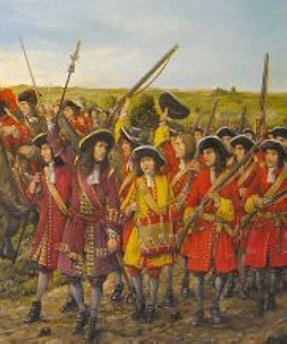
In 1690 most Jacobite armies were using the matchlock musket, a more primitive weapon than the flintlock that soon replaced it — though some Jacobite units had flintlocks. Most of William's infantry were equipped with flintlocks.
Pikes
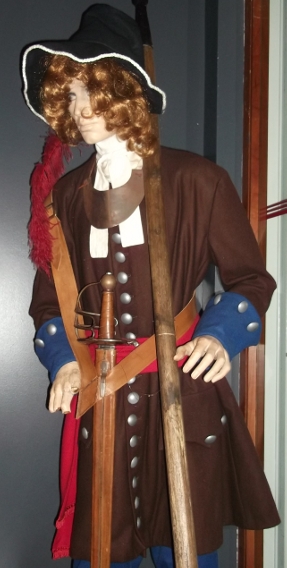
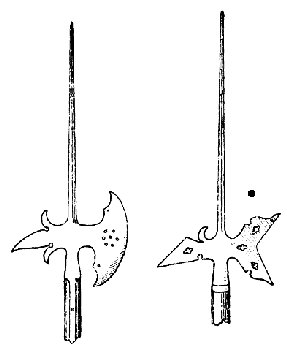
Pikes were still used in Ireland at this time, though dying out. Well-equipped units had one pike to every six muskets. The advantage of the musket was that a soldier no longer needed weeks of training; the standard tactic was to form units into seven ranks, the first three firing together while the rear ranks reloaded, with the pikes held at the back against cavalry. The pikes carried by Sir Henry Inglesby's men in the Pageant each year are exact copies of those found in Carrickfergus Castle.
Cavalry
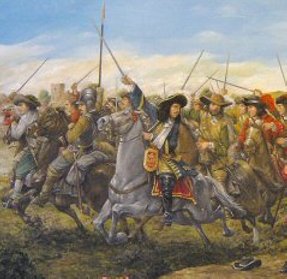
Grenadiers carried, in addition to a musket, a bag of grenades. Dragoons were mounted infantry who rode into battle but dismounted to fight. Cavalry, armed with swords and pistols, provided scouting and reconnaissance, covered the rear of a retreating army, and gathered intelligence on enemy movements.
Artillery
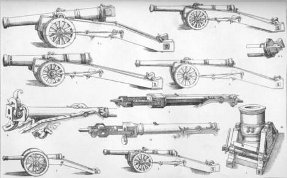
Artillery had a short range and was most often used to give covering fire or to break up an attack. The sound of cannon fire was effective in striking fear into the enemy; with poor accuracy and a slow rate of fire, it did not claim extensive casualties on the battlefield.